Image: California bobcat, Lynx rufus, Bill Wight, Rancho Cucamonga, CA USA
Bill W Ca at English Wikipedia [CC BY-SA 3.0], via Wikimedia Commons
Bobcats (Lynx rufus) are a medium size wild cat distributed over most of the United States, varying in color and coat pattern across its vast range.
This adaptable feline is adjusting to human settlements across North America. However, in the more urban areas this brings new direct threats such as vehicle collisions and rodenticides. Indirect threats such as highways can also create barriers to dispersal.
Bobcats are still legally hunted in some states in the USA and make up the highest number of skins in the fur trade.
Key Facts about Bobcats
~ Variable coloring & size ~
~ All of USA except Delaware ~
~ Most skins in legal fur trade ~
Books for Wild Cat Enthusiasts


Bobcat (Lynx rufus) Classification
The Bobcat species belongs to the genus Lynx and the full taxonomy or scientific classification is:
Kingdom: Animalia (animals)
Phylum: Chordata (vertebrates)
Class: Mammalia (mammals)
Order: Carnivora (carnivores)
Suborder: Feliformia (cat-like)
Family: Felidae (cats)
Subfamily: Felinae (small cats)
Genus: Lynx
Species: Lynx rufus (Bobcat)
Subspecies:
L.r. rufus (Eastern Bobcat)
L.r. fasciatus (Western Bobcat)
The scientific name for the Bobcat is Lynx rufus; which is also known as the binomial name, species name, Latin name, biological name or zoological name.
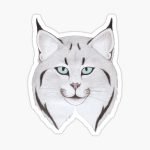
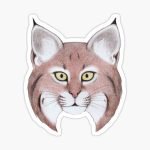
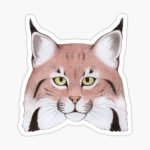
Classification Chart
This Bobcat classification chart shows where this cat fits into the Felidae family and in particular the Lynx genus.

Permission to use for personal or educational use.
Credit: www.WildCatFamily.com.

Bobcat (Lynx rufus) Subspecies
There are two subspecies (or types) of Bobcats according to the last Felidae taxonomic revision in 2017:
1. Eastern Bobcat (Lynx rufus rufus) - East of the Great Plains, North America
includes the previous subspecies: L. r. rufus, L. r. superiorensis, L. r. floridanus, L. r. gigas
2. Western Bobcat (Lynx rufus fasciatus) - West of the Great Plains, North America
includes the previous subspecies L. r. pallescens, L. r. baileyi, L. r. fasciatus, L. r. californicus, L. r. peninsularis, L. r. texensis
Requiring further research are the Mexican subspecies - L. r. esquinapae and L. r. oaxacensis.
Historically up to twelve Bobcat subspecies were recognized.
Bobcat (Lynx rufus) Research
Here is a list of papers published on Bobcats. Click on the title bar to view the abstract and the link to the article.
We document the presence of bobcats ( Lynx rufus ) that demonstrate melanism in the Greater Everglades. The South Florida landscape is driven by a myriad of disturbance regimes particularly that of short fire intervals.
We monitored 180 camera traps for 3 years and obtained 9503 photographs of bobcats, 25 (<0.5%) of these detections included melanistic individuals. Our observations and historical accounts suggest melanism is a phenotype that persists, albeit it at an exceedingly low frequency, in bobcats in the region.
While we do not know if the expression of melanism conferred a fitness benefit in our system, the vegetation structure that was characterized by frequently burned uplands and low‐light and densely vegetated swamps produced conditions that may render a benefit from melanism through enhanced crypsis.
The investigation of rare phenomenon in ecology is important yet difficult within a given field study, but reporting novel observations, like melanism in bobcats, allows for science to gain insight across studies that would not be otherwise possible.
Branney, Aidan & Abernathy, Heather & Conner, L. & Garrison, Elina & Cherry, Michael. (2024). Photographic documentation of melanism in bobcats (Lynx rufus) in the Greater Everglades. Ecology and Evolution. 14. 10.1002/ece3.10754.
The bobcat (Lynx rufus) is a medium-sized carnivore well adapted to various environments and an indicator species for landscape connectivity. It is one of the four species within the extant Lynx genus in the family Felidae. Because of its broad geographic distribution and central role in food webs, the bobcat is important for conservation.
Here we present a high quality de novo genome assembly of a male bobcat located in Mendocino County (California, USA) as part of the California Conservation Genomics Project (CCGP). The assembly was generated using the standard CCGP pipeline from a combination of Omni-C and HiFi technologies. The primary assembly comprises 76 scaffolds spanning 2.4 Gb, represented by a scaffold N50 of 142 Mb, a contig N50 of 66.2 Mb and a BUSCO completeness score of 95.90%.
The bobcat genome will be an important resource for the effective management and conservation of this species and comparative genomics exploration.
Lin, Meixi & Escalona, Merly & Sahasrabudhe, Ruta & Oanh, Nguyen & Beraut, Eric & Buchalski, Michael & Wayne, Robert. (2022). A Reference Genome Assembly of the Bobcat, Lynx rufus. Journal of Heredity. 113. 10.1093/jhered/esac031.
Bobcats (Lynx rufus) are distributed throughout North America, but bobcat densities have been well-documented primarily only for the United States. The highest known density of this species is in the southern United States, and from there their density decreases northward to southern Canada. Despite the fact that México contains about 35 % of the species range, there are no data on their abundance or density in México.
The objectives of this study were to document the density of bobcats from northwestern to southern México and to understand the abundance patterns of this species. Camera traps were used in combination with capture-recapture models to estimate densities.
Using the MaxEnt ecological niche model, the potential distribution of the bobcat was obtained. With an effort of 2,070 camera trap days, we obtained 41 bobcat photographs in five localities from 2005 to 2007. Our estimated bobcat densities varied from 0.05 to 0.53 bobcat/km2.
Using MaxEnt, we estimated the available habitat in each site and extrapolated the density data to obtain a range of bobcat population estimates per site. The areas estimated were between 1,861 to 16,663 km2, with a population from 592 to 2,161 bobcats. Bobcat density in México is highest in the north and decreases to the south of its range.
Probably the optimal habitat for this species is found in the southern United States and northern México where the highest densities of its entire distribution occur.
Barcenas, H.V.; Medellin, R.A.
Sometimes I see spots: patterns of abundance and distribution of the bobcat (Lynx rufus) in different regions of México
2021 Therya (12)
The Canada lynx (Lynx canadensis) and the bobcat (Lynx rufus) are closely related species with overlap at their range peripheries, but the factors that limit each species and the interactions between them are not well understood.
Habitat selection is a hierarchical process, in which selection at higher orders (geographic range, home range) may constrain selection at lower orders (within the home range). Habitat selection at a very fine scale within the home range has been less studied for both lynx and bobcat compared to selection at broader spatiotemporal scales.
To compare this fourth-order habitat selection by the two species in an area of sympatry, we tracked lynx and bobcat during the winters of 2017 and 2018 on the north shore of Lake Huron, Ontario.
We found that both lynx and bobcat selected shallower snow, higher snowshoe hare abundance, and higher amounts of coniferous forest at the fourth order. However, the two species were spatially segregated at the second order, and lynx were found in areas with deeper snow, more snowshoe hare, and more coniferous forest.
Taken together, our findings demonstrate that the lynx and bobcat select different resources at the second order, assorting along an environmental gradient in the study area, and that competition is unlikely to be occurring between the two species at finer scales.
Morin, S.J.; Bowman, J.; Marote, R.R.; Fortin, M.
Fine-scale habitat selection by sympatric Canada lynx and bobcat
2020 Ecology and Evolution (10): 9396-9409
Global urbanization is rapidly changing the landscape for wildlife species that must learn to persist in declining wild spacing, adapt, or risk extinction. Many mesopredators have successfully exploited urban niches, and research on these species in an urban setting offers insights into the traits that facilitate their success.
In this study, we examined space use and activity patterns from GPS-collared bobcats (Lynx rufus) in the Dallas-FortWorth metroplex, Texas, USA.
We found that bobcats select for natural/agricultural features, creeks, and water ways and there is greater home-range overlap in these habitats. They avoid roads and are less likely to have home-range overlap in habitats with more roads. Home-range size is relatively small and overlap relatively high, with older animals showing both greater home-range size and overlap. Simultaneous locations suggest bobcats are neither avoiding nor attracted to one another, despite the high overlap across home ranges. Finally, bobcats are active at all times of day and night.
These results suggest that access to natural features and behavioral plasticity may enable bobcats to live in highly developed landscapes.
Young, J.K.; Golla, J.; Draper, J.P.; Broman, D.; Blankenship, T.; Heilbrun, R.
Space Use and Movement of Urban Bobcats
2019 Animals (9): 1-13
Wildlife researchers often rely on demographic data collected from harvested animals to estimate population dynamics. But demographic data from harvested animals may be nonrepresentative if hunters/trappers have the ability and motivation to preferentially select for certain physical traits. Hunter preference is well demonstrated for ungulates, but less so for other wildlife species such as furbearers.
We used data from bobcats harvested in Wisconsin (1983-2014) to determine if harvest method and demographics (mass, male:female sex ratio and age) have changed over time, and if bobcat hunters/trappers exhibited selection.
Each trait of harvested bobcats that we tested changed over time, and because these selected traits were interrelated, we inferred that harvest selection for larger size biased harvests in favour of older, male bobcats. The selection of older, male bobcats appears primarily driven by hound hunters (hereafter hunters) compared to trappers, with hunters more frequently creating taxidermy mounts from their harvested bobcats. We found an increase in the proportion of bobcats that were harvested by hunting compared to trapping over time, and this was associated with increased selectivity and substantial changes in the characteristics of harvested bobcats.
Selection by hunters may bias population models that are based on the demography of harvested bobcats, and accounting for biases that may occur, including from different harvest methods, is critical when using harvest-dependent data.
Allen, M.L.; Roberts, N.M.; Van Deelen, T.R.
Hunter selection for larger and older male bobcats affects annual harvest demography
2018 Royal Society Open Science (5): 1-11
View more articles on Lynx rufus on ResearchGate.
Consider joining the Friends of the Cat Specialist Group to access the full articles and receive their journal Cat News covering the latest wild cat research.


Bobcat Conservation
The global conservation status of the Bobcat is Least Concern (LC) and it is one of the more common and adaptable feline species.
The following organizations are involved in rescue and rehabilitation of Bobcats that have been injured in urban environments, as well as ongoing essential research:
Bay Area Bobcat Project - Felidae Conservation Fund
Wildlife Rescue and Rehabilitation
Please support these organizations with their important work if you can. No matter the size of your contribution, every bit helps!
Past projects:
Big Cat Rescue - Bobcat Rehabilitation
International Lynx Day
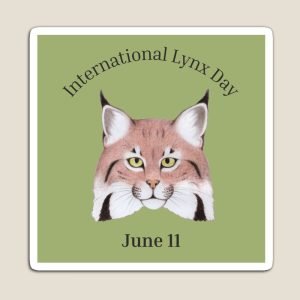
International Wild Cat Days: Get your family or class involved with International Lynx Day which is celebrated every year on June 11th.
Bobcat Facts and Information
These organizations have well researched and authoritative information on Bobcats:
- IUCN Cat Specialist Group - Detailed Information
- IUCN Red List - Status and Distribution Map
- ISEC Int. Soc. Endangered Cats - Species Overview
