Parasites and Diseases Affecting Feral Cats: What You Should Know

Parasites and Diseases Affecting Feral Cats: What You Should Know

with No Comments

Advertisement


Most people who encounter a feral cat don't think much of it — a passing glance, maybe a moment of curiosity. Yet that brief encounter can involve a surprising range of health risks that are easy to underestimate.

Feral cats or stray cats are free roaming, unowned domestic cats, originating from owned cats that escaped or were abandoned at some point in the past. They are also sometimes called 'wild cats' as they tend to revert to 'wild' behaviour and live outdoors in the 'wild', however, to avoid confusion with the true wild cat species; this article uses the term feral cats.

Stray cat outdoors in wood pile
Source

Feral cats carry a distinct disease and parasite burden compared to pets living indoors. Their exposure to prey animals, contaminated soil, other cats, and flea populations creates consistent pathways for zoonotic disease transmission to humans and domestic animals alike. The most significant categories include parasitic infections like toxoplasmosis, roundworms, and hookworms; bacterial conditions such as cat scratch disease; fungal skin infections like ringworm; and viral threats, most notably rabies.

Risk levels shift depending on the type of contact involved. A bite or scratch represents a direct exposure route, while contaminated feces or flea-infested environments create indirect risks that are harder to track. Feral colonies and free-roaming cats that hunt actively tend to carry the highest parasite loads, making any unmanaged population worth approaching with genuine awareness.
Which Risks Matter Most Around Feral Cats

The disease and parasite risks tied to feral cats fall into four broad categories: parasitic infections, bacterial infections, fungal infections, and viral threats like rabies. Each category involves different transmission pathways, and understanding that distinction helps clarify where real exposure risk begins.

Parasites such as roundworms, hookworms, and the protozoan responsible for toxoplasmosis spread primarily through feces-contaminated environments. Bacterial infections, including cat scratch disease and Pasteurella-related wound infections, tend to follow direct contact, bites, or flea exposure. Ringworm, a fungal infection despite its name, transmits through contact with an infected cat's coat or skin. Rabies, while lower in frequency, remains the highest-consequence viral risk associated with wild cat bites.

Risk rises considerably with roaming behavior, active prey hunting, flea infestations, and unmanaged colony living. Direct contact, such as handling or being bitten, carries the most immediate risk, but indirect environmental exposure through contaminated soil, sandboxes, or shared outdoor spaces is just as real and often harder to recognize.

How Feral Cats Spread Parasites and Disease

Feral cats face an entirely different set of exposures than indoor pets do. Without routine vet visits for cats, vaccinations, or parasite prevention, they accumulate pathogens across their lifetimes through hunting, scavenging, colony contact, and constant outdoor roaming.

Bites and scratches are the most direct transmission route. Bartonella henselae, the bacterium behind cat scratch disease, spreads readily through claw and bite wounds, often carried from cat to cat by fleas before reaching a human host.

Pasteurella multocida is present in the mouths of most cats and causes rapid soft tissue infections when introduced through a bite. Even minor wounds deserve prompt attention, particularly around feral cats whose health status is completely unknown.

Fleas compound the risk significantly. They act as vectors for multiple pathogens and can transfer disease without any direct contact with the cat itself, making flea-infested outdoor environments a concern in their own right.

Indirect Exposure Through Soil, Water, and Prey

Not all exposure requires touching a cat. Toxoplasma gondii oocysts shed in feral cat feces can persist in garden soil, sandboxes, and contaminated water for months, which is why children playing outdoors and gardeners without gloves represent a consistent exposure group.

Salmonella cycles through prey species that feral cats hunt and partially consume, contaminating shared outdoor spaces in the process. Immunocompromised individuals face the sharpest consequences from these indirect routes, since infections that resolve on their own in healthy adults can become serious when the immune response is limited.

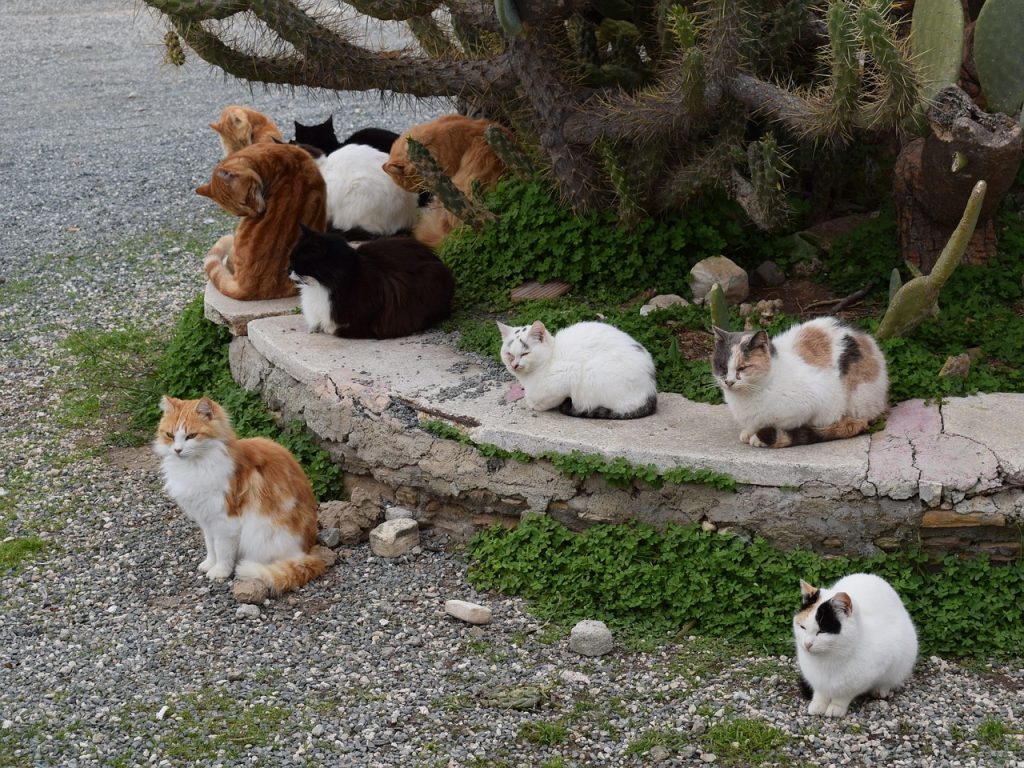
Feral cat colony.
Source

The Main Parasites and Infections to Know

The conditions covered below range from common environmental exposures to lower-frequency but high-consequence infections. Keeping related conditions grouped makes it easier to understand how transmission pathways overlap, particularly between the intestinal parasites discussed in the first subheading and the flea-borne risks that follow.

Intestinal Parasites and Protozoa

Feral cats are reliable hosts for several intestinal parasites that can spread to humans and domestic animals through environmental contamination.

Toxocara cati (roundworm) is shed in feces and can persist in soil for extended periods. Children are particularly vulnerable, as accidental ingestion through contaminated soil or sandbox play is a well-documented exposure route.

Ancylostoma (hookworm) larvae penetrate skin directly, making bare-foot contact with contaminated ground a genuine concern in areas with active feral cat populations.

Dipylidium caninum and other tapeworms spread through flea ingestion, connecting intestinal parasite risk directly to flea exposure in shared outdoor spaces.

On the protozoal side, toxoplasmosis is the most widely recognized threat. According to CDC toxoplasmosis data, most healthy adults experience no symptoms, yet the infection carries serious implications for immunocompromised individuals and developing fetuses. Cryptosporidium and Giardia follow similar indirect pathways, transmitting through contaminated water or surfaces, and are increasingly documented in feral cat populations.

Bartonella henselae, the bacterium behind cat scratch disease, typically enters through scratches or bites and causes swollen lymph nodes, fever, and fatigue. As noted in the previous section, fleas carry it between hosts before it ever reaches a human.

Pasteurella multocida is a fast-acting bacterial infection introduced through bite wounds, capable of producing significant swelling and tissue damage within hours.

Ringworm, despite the name, is a fungal infection transmitted through direct contact with an infected cat's coat or skin. It spreads easily and is especially common in young or immunocompromised individuals.

Salmonella rounds out the bacterial picture, cycling through prey and contaminated environments. Rabies, while lower in frequency, carries the highest consequences of any infection on this list, particularly following bites from cats displaying abnormal or aggressive behavior.


 

How to Lower Exposure Around Feral Colonies

Reducing zoonotic disease risk around feral cats starts with consistent hygiene practices. Handwashing after any outdoor activity near known colonies is essential, and anyone handling feral cats directly, whether for trapping, assessment, or relocation, should wear disposable gloves throughout. Feces should never be moved or cleaned up barehanded, since materials like toxoplasmosis oocysts remain viable in soil long after the cat has moved on.

Property protection matters just as much as personal hygiene. Sandboxes should be kept covered when not in use, garden beds are worth monitoring for signs of feral cat activity, and any outdoor water sources or feed storage areas should be secured against contamination.

Flea control is another practical layer that households often overlook. Owned pets that roam outdoors or share spaces with feral colonies can bring fleas indoors, which creates indirect exposure pathways to several of the infections covered in earlier sections.

At the community scale, coordinated management reduces the overall disease burden more effectively than individual precautions alone. TNR (trap-neuter-return) programs can include vaccination components that meaningfully lower transmission risk across a colony. Regular monitoring, coordination with animal control, and consultation with wildlife professionals all contribute to keeping vulnerable wild cat species and human communities from bearing unnecessary disease pressure.

Why Awareness Matters More Than Alarm

Feral cats are a natural part of many landscapes, but they are also consistent carriers of zoonotic disease, and that combination deserves respect rather than indifference.

The practical takeaway across this article is straightforward. Distance, hygiene, and informed community management reduce exposure meaningfully without requiring anyone to view every feral cat as an immediate threat. Most risks arise from direct handling, bite wounds, or unprotected contact with contaminated environments, all of which are avoidable with reasonable precautions.

Treating feral cats as potential disease reservoirs, rather than as harmless strays, reflects sound judgment rather than alarm.

Leave a Reply

This site uses Akismet to reduce spam. Learn how your comment data is processed.