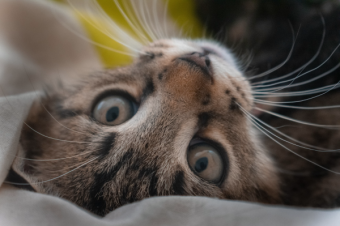
Flat-Faced Cats: From the Pallas's Cat to the Persian

Flat-Faced Cats: From the Pallas’s Cat to the Persian

with No Comments

Advertisement


Few cat traits divide opinion as much as the trait of a flat face. To some, a flat face is the height of cuteness; to others, it’s a potential threat to the welfare of those cats. The trait of having a flat face is not limited to a few breeds of domestic cats. Wild cats from Central Asia to domestic breeds selectively bred in the last few decades can have these flat faces. Understanding the genetics behind this physical trait is important for both cat lovers and prospective cat owners.

What "Flat-Faced" Actually Means

The technical term for brachycephaly is from the Greek for “short head.” Brachycephaly means that the bones of the face are compressed from front to back, shortening the muzzle of the dog or cat and bringing the eyes, nose, and jaw closer together. While brachycephaly can be seen in both dogs and cats, the causes of brachycephaly are not the same in each of these species

Flat-faced Pallas's Cat


Pallas's Cat: Nature's Original Flat Face

The Pallas's cat (Otocolobus manul) is a small wild cat native to the steppes and rocky grasslands of Central Asia, ranging from Iran through Mongolia and into parts of China and Russia. It's roughly the size of a domestic cat but looks much stockier, thanks to an extremely dense, long coat — thought to be the thickest of any cat species — that insulates it against the brutal cold and wind of its high-altitude habitat.

Its face is broad and flattened, with eyes set low and wide rather than angled like most cats, and ears that are small, rounded, and set low on the sides of the head rather than on top. This isn't a cosmetic accident. Pallas's cats are ambush hunters that rely on stealth in open, exposed terrain with little cover. A low, flat profile lets them hug the ground and peer over rocks and rises while staying hidden, and the wide-set eyes and low ears likely help with this same flattened, hunkered-down posture. The shape works with the animal's anatomy rather than against it — there's no evidence of the breathing or dental problems seen in some domestic brachycephalic breeds.

Pallas's cats are notoriously difficult to spot in the wild and are classified as a species of least concern by conservation bodies, though they face localized pressures from habitat degradation, prey decline, and historical hunting for fur. They are not, and should not be, kept as pets — they remain a wild species with specialized needs that domestic environments can't meet.

The Persian: Selective Breeding Taken to an Extreme

The Persian is one of the oldest and most recognizable domestic cat breeds, prized for centuries for its long, luxurious coat and sweet, placid temperament. Historically, Persians had a moderately flat face but a clearly visible nose. Over the 20th century, breed standards in many show circuits shifted toward an increasingly extreme "doll-face" to "peke-face" look, with some show-standard Persians today having a nose set almost flush with the face, between the eyes.

This is where the comparison with the Pallas's cat breaks down. Unlike the manul, the modern show-type Persian's facial structure wasn't shaped by function — it was shaped by aesthetic preference, pushed further with each generation of breeding toward a look that doesn't necessarily improve the cat's quality of life. Veterinary literature documents a real list of associated problems in extreme brachycephalic Persians, including:

  • Breathing difficulty from narrowed nostrils and a shortened airway
  • Chronic eye issues, including excessive tearing, eye discharge, and corneal damage from shallow eye sockets
  • Dental crowding and malocclusion, since the jaw is shortened but the teeth are not
  • Tear duct blockages, leading to persistent staining around the eyes
  • Birthing difficulties, with some lines requiring higher rates of cesarean delivery due to kitten head size relative to the dam's pelvis

It's worth noting that not all Persians are affected equally. "Traditional" or "doll-face" Persians, which retain a more moderate nose length closer to the breed's historical type, generally don't suffer these problems to the same degree. The extreme “ultra-type” or “peke-face” Persian cats that are of great interest to some show rings are also the cats that express these welfare concerns. Several major veterinary and feline welfare organizations around the world have called for the breed standards for Persians to move towards the moderate type of Persian cat - precisely for this reason.

Other Flat-Faced Breeds Worth Knowing

The Persian isn't the only domestic breed carrying this trait, and the spectrum of severity varies quite a bit.

Exotic Shorthair — Often described as "the lazy man's Persian," the Exotic Shorthair was developed by crossing Persians with American Shorthairs to get the Persian's flattened face and stocky body in a short, low-maintenance coat. Because it shares so much ancestry with the modern Persian, it shares the same range of brachycephalic concerns, and breeders working responsibly with this breed face the same pressure to favor moderate over extreme facial type.

Himalayan — Essentially a Persian with the color pattern and blue eyes of a Siamese, bred in by crossing the two breeds. The Himalayan (sometimes classified as a Persian color variety rather than a separate breed) inherits the Persian's facial structure wholesale, including the same risks when bred to the extreme end of the standard.

Burmilla — A cross between a Chinchilla Persian and a Burmese, the Burmilla has a softer brachycephaly than the Persian — a short, slightly rounded face rather than a fully flattened one. It's generally considered a moderate case, closer to the Pallas's cat end of the spectrum in terms of functional impact, though individual cats can vary depending on how much Persian influence shows in the skull shape.

What This Means If You're Considering One of These Cats

If your cat has an affinity for the flat-faced look, the first question that you should ask yourself is not which breed has the most suitable facial features, but rather how moderate or extreme is the flat-faced look of the individual cat that you own. A Persian cat will generally have a more suitable facial structure than an ultra-type Persian breed that is selectively bred to have the most extreme facial features.

A few practical things to look for:

  • A nose that is set forward of the eye line, not flush between the eyes
  • Open nostrils, not pinched or slit-like
  • No audible noisy breathing, snoring, or open-mouth breathing at rest
  • Eyes that aren't bulging, weeping constantly, or showing visible white at rest

Responsible breeders will consider the health of Persian cats as much as their appearance. This includes screening for genetic conditions like polycystic kidney disease (a known issue with Persian cats), ensuring their Persian cats have a moderate facial type, and being transparent about the health testing of their breeding cats. If you are considering getting a Persian cat, speak with a breeder about these issues to ensure that they breed for health rather than the most extreme appearance standard. The Responsible Pet Breeders Australia Persian cat directory can help you to find a breeder who meets these criteria.

The Bigger Picture

Flat faces in cats aren’t inherently good or bad; it all depends on the context. The Pallas’s cat demonstrates the advantages of a flat face in the wild. In contrast, the Persian and its relatives showcase the disadvantages of taking a trait that evolution designed as a general feature and pushing it to the limits of biological possibility due to human preference. Knowing the difference allows for the appreciation of these feline relatives in their natural habitats and homes alike.

Leave a Reply

This site uses Akismet to reduce spam. Learn how your comment data is processed.